


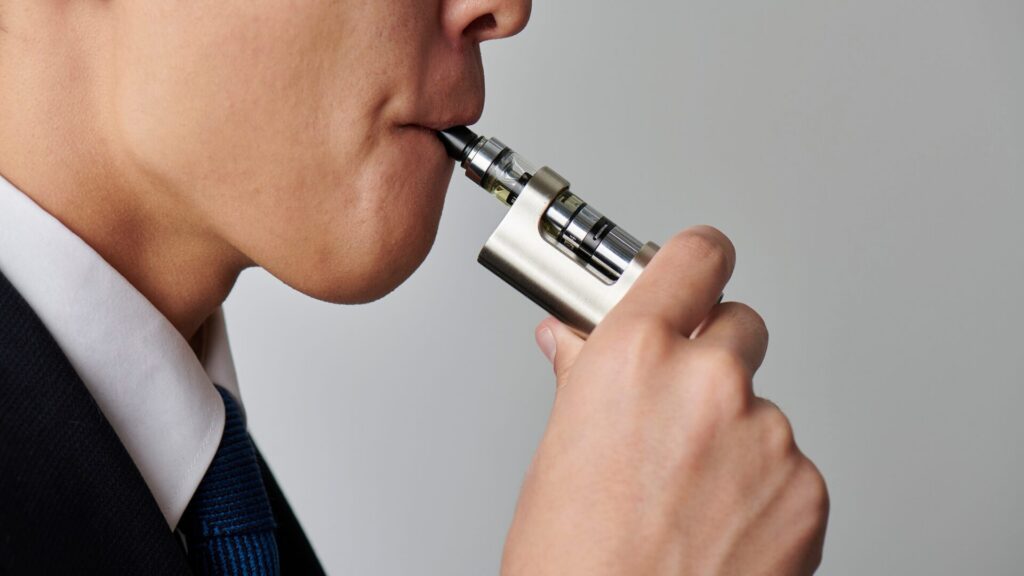
What are the risks of vaping? What you really need to know in the Antilles
The electronic cigarette is often presented as a «healthier» alternative to tobacco. However, an increasing number of healthcare professionals are sounding the alarm: vaping is not a trivial act.
Respiratory effects, nicotine addiction, cardiovascular risks… The consequences of vaping are still widely underestimated. So, Should we be worried about e-cigarettes? Here's what you really need to know.
Vaping: a reassuring alternative… but a misleading one
Modern design, discreet scent, and the absence of visible smoke: the electronic cigarette enjoys a positive image, almost «healthy». This perception leads many people to vape more often than when they smoked.
Yet, less harmful does not mean harmless. Vaporing exposes the body to chemical substances inhaled directly into the lungs, sometimes hundreds of times a day.
The main problem is the lack of scientific research. Electronic cigarettes are a relatively new product, and their effects have not yet been fully studied. long-term effects are still poorly understood.https://fr.wikipedia.org/wiki/Cigarette_%C3%A9lectronique
Risk of vaping: what does an e-cigarette actually contain?
Contrary to what one might think, steam is not composed of water.
E-liquids usually contain:
- nicotine, sometimes in high doses,
- propylene glycol and vegetable glycerin,
- artificial flavours,
- compounds derived from the heating of liquids.
When these substances are heated, they can produce molecules that are irritating or toxic to the body, especially to the respiratory tract.
The repeated inhalation of these compounds raises many medical questions today.
The effects of vaping on the lungs
The lungs are on the front line. Many vapers report:
- chronic irritation of the throat,
- a persistent cough,
- an unusual shortness of breath,
- a sensation of chest oppression.
Recent studies suggest that vaping could:
- alter the pulmonary function,
- promoting lasting inflammation,
- weakening the bronchi.
In some people, especially those with asthma or young adults, these effects can appear quickly.
Vaping and cardiovascular health: an underestimated risk
Nicotine acts directly on the cardiovascular system, regardless of its form.
It leads to:
- an acceleration of the heart rate,
- an increase in blood pressure,
- a contraction of the blood vessels.
In the long term, these effects can contribute to increasing the risk of cardiovascular disorders, especially in people already presenting risk factors.
Vaping regularly, even without smoking, thus maintains a harmful stimulation of the cardiovascular system.https://www.anses.fr/fr/content/vapoter-quels-risques-pour-la-sante
Nicotine addiction: the real trap of vaping
One of the major risks of vaping is normalisation of dependence.
The electronic cigarette allows:
- to smoke more frequently,
- without constraint of location,
- sometimes without real awareness of the amount consumed.
The result: some people absorb more nicotine than with a conventional cigarette, while feeling that they are better able to manage their consumption.
This prolonged dependence makes stopping more difficult and often delays a complete release.
Vaping among young people: a health alert
Vaping is experiencing great success among teenagers and young adults. This trend is causing concern among health authorities.
The brain, which is still developing, is particularly sensitive to nicotine. Early exposure increases the risk:
- of rapid addiction,
- of lasting dependence,
- Later, on a visit to the tobacco shop.
Contrary to popular belief, vaping is not always a way to avoid cigarettes: this can be the gateway to it.https://www.generationsanstabac.org/fr/fiches/vapotage-synthese-des-risques-pour-la-sante/
Vaping to quit smoking: a partial solution
Some people use e-cigarettes to reduce or quit smoking. While this strategy may work in the short term, it does not address the underlying problem: dependence on nicotine.
In many cases, vaping:
- maintains the gesture,
- prolongs the addiction,
- It delays a final stop.
Stopping completely, without a nicotine substitute, often allows for a clearer and more sustainable approach.
LaserAddict: quit without nicotine, without substitutes
LaserAddict supports people who want to quit smoking or vaping with an innovative method that is nicotine-free and chemical-free.
The goal is simple:
not replacing one dependency with another, but to find lasting freedom, without frustration or compensation.
Each support is personalised, with a compassionate approach focused on the mechanisms of addiction.https://mq.laseraddict.fr/services/arreter-de-fumer-tabac/
In short: should we be wary of vaping?
Vaping is often presented as less harmful than smoking, but that doesn’t mean it’s without risk.
The main identified hazards are:
- repeated exposure to chemical substances,
- the respiratory and cardiovascular effects,
- Prolonged dependence on nicotine,
- The worrying impact in young people.
The safest solution remains a complete stop, accompanied by professionals.
Do you want to quit smoking or vaping?
The teams LaserAddict They accompany you throughout France to help you permanently get rid of nicotine.
Make an appointment at your LaserAddict centre and embark on a serene journey towards a life without addiction.https://mq.laseraddict.fr/centre/laseraddict-lamentin/
The LaserAddict team.