

What is the chemical link between addictions and stress?
The stress and addictions They are closely linked. Tobacco, sugar, alcohol or other addictive behaviours are very often used as quick solutions to cope with the tensions of everyday life. Yet, from a chemical, neurological and hormonal, these substances and behaviours do not reduce stress; they maintain and amplify it.
Understanding the chemical link between addictions and stress It is an essential step for lasting independence from dependency. It is also the foundation of the comprehensive approach proposed by LaserAddict, specialised in the accompaniment of addictions and emotional balance.
Stress and the brain: a natural chemical reaction
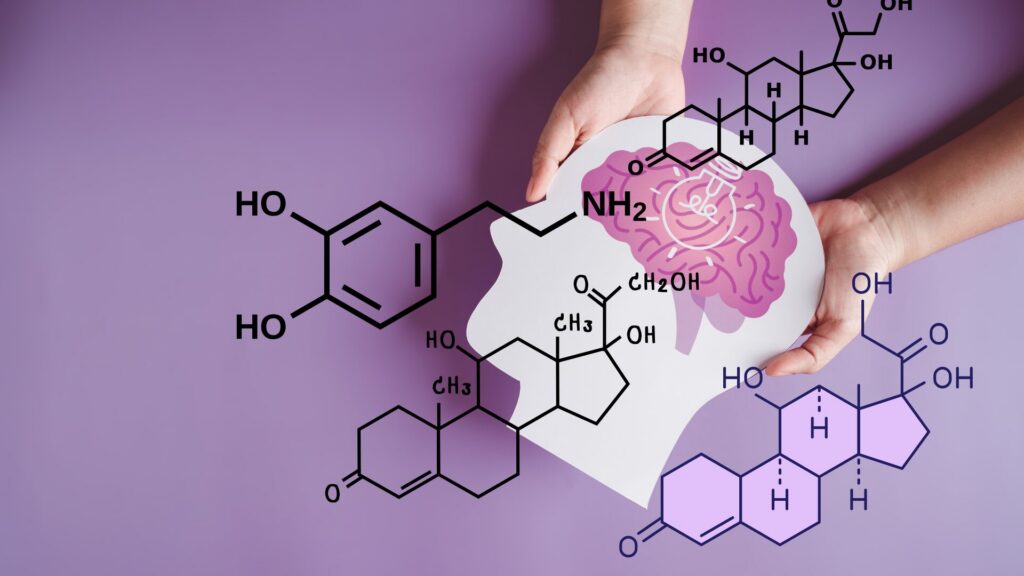
Stress is first and foremost a normal biological reaction. In response to a perceived threat, the brain activates the hypothalamic-pituitary-adrenal axis (HPA axis), leading to the release of several hormones:
- adrenaline (immediate reaction)
- noradrenaline (vigilance)
- cortisol (adaptation to stress)
Cortisol allows the body to mobilise energy, increase concentration and react quickly. The problem arises when this mechanism is impaired. called upon too often, as in our modern lifestyles.
Why stress promotes addictions
Under chronic stress, the brain instinctively seeks to relieve internal tension. He then turns to substances or behaviours that can act quickly on brain chemistry.https://www.who.int/fr/news-room/questions-and-answers/item/stress#:~:text=Qu’est%2Dce%20que%20le,stress%20dans%20une%20certaine%20mesure.
Addictions have one thing in common: they stimulate the reward system, by causing the release of dopamine, the neurotransmitter of pleasure and motivation.
Result:
- feeling of temporary relief
- feeling of relaxation
- temporary drop in anxiety
But this effect is artificial and short-lived.
Dopamine, cortisol and addiction: the heart of the chemical link
Every addiction is based on an imbalance between two systems:
- the system of reward (dopamine)
- the system of stress (cortisol)
The key role of dopamine
Dopamine is not the happiness hormone, but the hormone of pleasure-seeking. The more a substance triggers a rapid and intense release of dopamine, the more the brain learns to crave it.
With time:
- the brain becomes less sensitive
- the frequency or intensity has to increase
- pleasure decreases, but the need increases
Cortisol, the hidden fuel of addictions
Contrary to popular belief, most addictions increase the cortisol level.
Tobacco, sugar, alcohol or screens keep the body in a state of chemical alert. The relief felt corresponds only to the temporary disappearance of the lack.
Addiction does not relieve stress: it becomes a permanent source of it.
The vicious circle of stress–addiction
The chemical link between stress and addiction works like a closed loop:
- stress increases
- the substance provides rapid relief
- cortisol levels rise
- withdrawal sets in
- the stress intensifies
The more often this cycle repeats, the more the brain associates stress with addiction as a «solution».
Withdrawal: a misunderstood stress
When an addiction stops, many symptoms appear:
- nervousness
- irritability
- agitation
- sleep disorders
These signs are often interpreted as an inability to manage stress without addiction. In reality, they are a symptom of addiction. transient chemical imbalance related to the cessation of artificial stimulation.
Once this rebalancing is achieved, the level of stress falls lastingly.
LaserAddict: Rebalancing the chemistry of stress and addiction
At LaserAddict, support for addictions is based on a detailed understanding of the chemical functioning of the brain.
The method uses a gentle laser stimulation, inspired by acupuncture, it allows to:
- reduce excessive cortisol production
- calm the nervous system
- reduce compulsive cravings
- facilitate withdrawal without substitutes
LaserAddict currently supports:
- quitting smoking
- weight loss
- the addiction to sugarhttps://mq.laseraddict.fr/addiction-au-sucre-un-phenomene-sous-estime/
- eating disorders
- managing stress and mental load
- emotional balance, especially during menopausehttps://mq.laseraddict.fr/services/
Breaking the association stress = addiction
An essential part of the work is to decondition the brain. Over time, certain situations become automatic triggers:
- professional pressure
- strong emotions
- fatigue
- moments of pause
LaserAddict helps break this association, allowing the brain to regain its natural self-regulation mechanisms.
The benefits of successful withdrawal on stress
After a sustained stop, the benefits are profound:
- reduction of chronic stress
- better emotional stability
- restful sleep
- more constant energy
- regained confidence and freedom
Breaking free from an addiction does not mean losing a crutch; it means removing a permanent chemical source of stress.
In conclusion: stress and addictions, a chemical illusion
The link between addictions and stress is primarily chemical and neurological. Addictions create a false sense of calm that masks a deep hormonal dysfunction.https://www.santemagazine.fr/sante/maladies/stress/le-magnesium-est-il-efficace-contre-le-stress-1140381
By rebalancing the nervous system and brain chemistry, as proposed by LaserAddict, this makes it possible to break out of the vicious cycle, regain natural and manageable stress, and achieve a state of wellbeing. sustainable balance, without dependence.https://mq.laseraddict.fr/services/arreter-de-fumer-tabac/
Get started right now
Do you feel that stress and an addiction are taking up too much space in your life? You are not alone, and especially, solutions exist.
The centres LaserAddict They accompany you throughout France with a gentle method, without substitutes or medication, to help you regain your freedom and a better emotional balance.
Make an appointment today at your LaserAddict centre and take the first step towards a more serene life, free from stress and addictions.https://mq.laseraddict.fr/centres-laser/
The LaserAddict team.